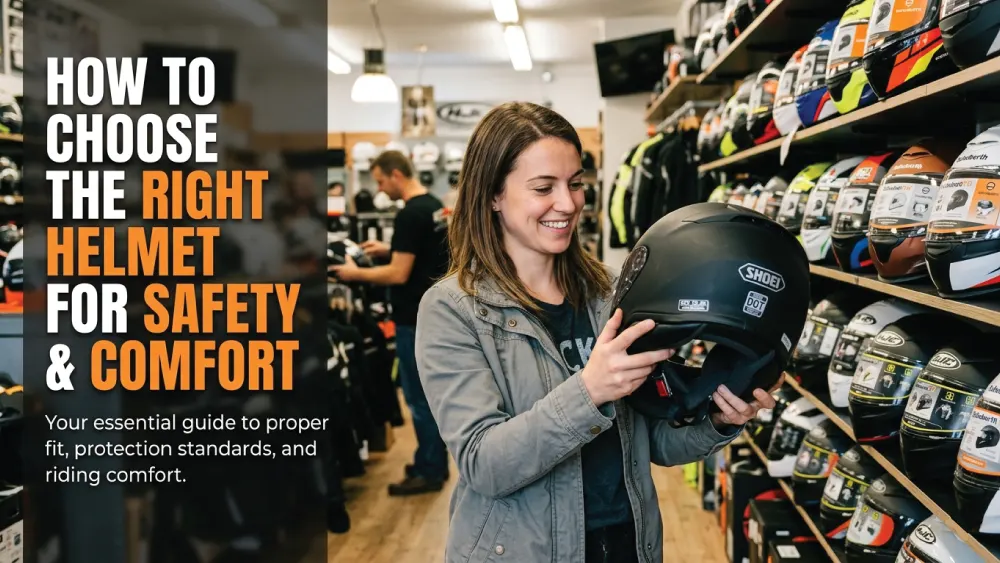
Choosing the right helmet is one of the most important decisions a rider can make. Whether you’re commuting daily, riding on highways, or planning long tours, a helmet is your first line of defense against serious injuries. But with so many options available in the market, finding the perfect helmet that balances safety, comfort, and style can feel overwhelming.In this detailed guide, we’ll walk you through everything you need to know about selecting the right helmet-so you can ride confidently and safely every time.
Why Wearing the Right Helmet
A helmet is not just a legal requirement-it’s a lifesaving tool. Studies show that wearing a certified helmet can reduce the risk of head injury by up to 70%. But here’s the catch: not all helmets offer the same level of protection.
Choosing the wrong helmet-whether it’s too loose, poorly ventilated, or lacks certification-can compromise your safety and comfort.
Ever-evolving bike tips emphasize that fit and quality matter more than price or design.
Types of Helmets Explained
Understanding helmet types is the first step toward making the right choice.
1. Full-Face Helmet
- Offers maximum protection (covers entire head and chin)
- Best for highway and long-distance riders
- Reduces wind noise and improves aerodynamics
2. Open-Face Helmet
- Covers head but leaves face exposed
- Ideal for city riding
- Less protection compared to full-face helmets
3. Modular (Flip-Up) Helmet
- Hybrid of full-face and open-face
- Chin bar can be lifted
- Great for touring riders
4. Half Helmet
- Minimal coverage
- Stylish but offers the least protection
Pro Tip: If safety is your top priority, always go for a full-face helmet.
Key Safety Certifications to Look For
Never buy a helmet without proper certification. These certifications ensure that the helmet has passed impact and durability tests.
Important Certifications:
- ISI (India) – Mandatory for Indian roads
- DOT (USA) – Basic international safety standard
- ECE (Europe) – More advanced and widely trusted
- SNELL – Premium racing-grade certification
Always check for the certification label inside the helmet before purchasing.
How to Choose the Right Helmet Size
A helmet that doesn’t fit properly can be dangerous.
Steps to Measure Your Size:
- Use a measuring tape around your head (just above eyebrows)
- Match the measurement with the brand’s size chart
- Try the helmet before buying (if possible)
Perfect Fit Checklist:
- Snug but not tight
- No movement when you shake your head
- Comfortable pressure around cheeks
A loose helmet can come off during impact, while a tight one can cause headaches.
Comfort Factors You Shouldn’t Ignore
Safety is crucial, but comfort ensures you actually wear the helmet regularly.
Key Comfort Features:
- Soft inner padding
- Breathable lining
- Lightweight design
- Noise reduction
Long Ride Comfort Tips:
- Choose helmets with removable and washable liners
- Ensure proper airflow
- Avoid heavy helmets for daily use
At Bike Connects, we always highlight that comfort directly impacts riding performance and focus.
Helmet Materials and Build Quality
Helmet construction plays a major role in both safety and durability.
Common Materials:
- ABS Plastic – Affordable and durable
- Polycarbonate – Lightweight and impact-resistant
- Fiberglass Composite – Strong and flexible
- Carbon Fiber – Premium, lightweight, and extremely strong
Higher-quality materials absorb impact better and last longer.
Ventilation and Weather Considerations
India’s weather can be unpredictable-especially during summers and monsoons.
Why Ventilation Matters:
- Keeps your head cool
- Prevents sweating
- Reduces fogging
Look For:
- Multiple air vents
- Exhaust vents at the back
- Anti-fog features
Good ventilation can make a huge difference during long rides.
Visor Types and Visibility
Your helmet visor is your window to the road.
Types of Visors:
- Clear Visor – Best for night riding
- Tinted Visor – Reduces sunlight glare
- Anti-Fog Visor – Ideal for cold or rainy conditions
- Pinlock Visor – Premium anti-fog solution
Visibility Tips:
- Ensure wide field of vision
- Check scratch resistance
- Replace damaged visors immediately
Budget vs Premium Helmets: What to Choose
Many riders wonder whether they should invest in a premium helmet.
Budget Helmets (Rs 1,000 – Rs 3,000):
- Basic protection
- ISI certification
- Suitable for city riding
Mid-Range Helmets (Rs 3,000 – Rs 7,000):
- Better comfort and ventilation
- Improved safety features
Premium Helmets (Rs 7,000+):
- Advanced materials (carbon fiber, fiberglass)
- Superior comfort and aerodynamics
- Multiple certifications
Choose based on your riding style, not just your budget.
Maintenance and Replacement Tips
Even the best helmet won’t last forever.
Maintenance Tips:
- Clean visor regularly
- Wash inner padding
- Store in a dry place
- Avoid dropping your helmet
When to Replace:
- After a crash
- Every 3–5 years
- If straps or padding wear out
Common Mistakes to Avoid
Avoid these common helmet-buying mistakes:
- Choosing style over safety
- Ignoring certification
- Buying the wrong size
- Not checking ventilation
- Using old or damaged helmets
Smart riders prioritize protection over looks.
Conclusion
Choosing the right helmet is not just about looks or price-it’s about protecting your life while ensuring maximum comfort. A well-fitted, certified helmet can make all the difference in an emergency. As riding technology and safety standards continue to evolve, staying updated with the latest gear is essential. Platforms like Bike Connects regularly share expert insights and ever-evolving bike tips to help riders make smarter decisions. Invest in a good helmet today-it’s the best insurance for your rides tomorrow.
FAQs
Which type of helmet is safest?
Full-face helmets offer the highest level of protection as they cover the entire head and chin.
How do I know if my helmet fits correctly?
A properly fitting helmet should feel snug, not move when you shake your head, and not cause discomfort.
Is ISI certification enough?
ISI is mandatory in India, but helmets with ECE or DOT certification offer additional safety assurance.
How often should I replace my helmet?
You should replace your helmet every 3–5 years or immediately after a crash.
Can I use a tinted visor at night?
No, tinted visors reduce visibility at night and should only be used during the day.
Are expensive helmets worth it?
Yes, premium helmets provide better safety, comfort, and durability-especially for long rides.